A unique experiment in ‘stateless democracy’ and effective armed resistance against ISIS in Northern Syria is led by Kurdish women. Could their innovative model for social organization, which has brought peace, stability and progress to their region over the past three years, provide a way out for the crisis in Syria and other minorities in the Middle East? A personal account of a ‘political tourism’ visit to Rojava.
Category Archives: Political thoughts
Art and Soft Power in the Gulf
Article published in Issue #47 of Afkar / Ideas published in October 2015 by the European Institute of the Mediterranean in Barcelona / French version / Spanish version
Art and Soft Power in the Gulf
Recently, there has been much news and debate about how the Gulf States are acquiring the icons of global culture, such as famous paintings, works by star artists, and even whole museums. This is seen as the exercise of ‘soft power’, defined by Joseph Nye as ‘the ability to get what you want through attraction, rather than coercion or payments’. One may wonder then, which objectives direct the Gulf’s investments in art? And, are they being achieved? Continue reading
Life and death in Rojava
Day 2 in Northwestern Syria

Commander A… and soldier H… of the YPJ talking with our Filipina delegation member Ilena, with our translator Nahla in the midst
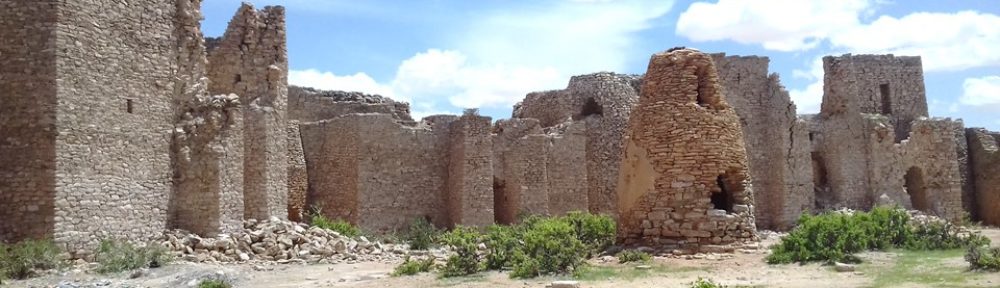
Today we were confronted more squarely with the war being fought in Syria, and the intensity of life and death in a beleaguered war zone; although we also got the chance to visit the 4000 year old archaeological site of Urkesh, one of the earliest cities.
Can we still believe in revolution?
Day 1 in Northwestern Syria
My first impression in Rojava, the autonomous Kurdish area in northeastern Syria, is that everything seems quite normal. For a small region still engaged in the fight against the Islamic State (although only three people die on the front per day, as compared to 20-30 a few months ago) and in the stranglehold of Erdogan’s Turkey, the area is remarkably quiet, and even seems prosperous, with shops full of goods and the fields and herds well-tended to.
A Political History of Art
My attempt to explain the deep relationship between artistic expression and political power, to the students of my course Contemporary Art in the Arab World at the Paris School of International Affairs.
This is the pdf of my presentation, of course without my commentary: ScPo 2015 seminar 2 Art and Politics.
Crime Scene Yemen

J… and General Al Radhi and General Nagi, in one of our endless and obviously pointless police reform strategy sessions
I wrote this while a member of a Police Reform mission in Sanaa in 2012. My team leader asked me to brainstorm with the Ministry of Interior’s Communication Department to see what could be done in terms of reform there. In contrast to the rest of the police, this department’s members were very reform-minded (as many socialist ex-South Yemenis officials are) and we had a fascinating exchange. After following up in subsequent meetings, I penned down my recommendations for a MoI comms strategy, in which producing a TV series played a central part. With the currently unfolding events in Yemen I feel free to share these recommendations with you.
Unwinding the history of the UAE
Historic consciousness in the UAE and in the other GCC states goes back only a few centuries, at most; this is how far back most prominent Emirati families can reliably trace their genealogy.
What happened in these lands before the advent of Islam is as alien to the current population, as if it had happened on another continent. Continue reading
Searching for Ancient Arabia magazine
Link
Searching for Ancient Arabia: the magazine, with contributions by Rahel Aima, Amal Bsiss, Liane Al Ghusain, Ahmed Makia, Mehdi Sabet and yours truly.
Searching for Ancient Arabia in Bahrain

View of the excavated Portuguese fort with the sea behind it, and the palm groves between the two. One of the beautiful sceneries we encountered during our research. Continue reading
Making Environments Hostile
A few days ago I got my certificate for Hostile Environment Awareness Training (HEAT) from the Carabinieri in Livorno. The Carabinieri are the Italian counterpart of the Gendarmerie, or Guardia Civil – the police force that depends from the Ministry of Defense. The training was given by the First Paratrooper Regiment (“Tuscania”), who engage in difficult operations abroad, like protecting VIPs in enemy territory or liberating hostages. They are strong, self-confident, good-looking and easy-going Italians, the real stuff, machos beyond posturing. Continue reading


