Book presentation: Het Continent van de Toekomst

On 18 September I will engage the author Daaf Borren in an interview at Boekhandel Douwes in The Hague, at 19:00, in a session open to the public. You are welcome!

Daaf Borren’s book ‘Het Continent van de Toekomst: Jongeren over Africa” explores what young (mostly educated) Africans think about their own continent, its challenges and how to resolve them. It is an energizing book that keeps the ‘Africa Rising’ discourse at a distance, and describes how many young people refuse victimhood narratives, while remaining critical about (neo)colonial patterns of domination.

One of the themes that struck me was the revival of the pan-Africanist ideal among young Africans desperate to get rid of corrupt elites held in power by Western extractive and security interests.

Banner image: part of Frantz Zéphirin 2007 – The Slave Ship Brooks as photographed at the 2022 Venice Biennial

Al Shabaab Governance – peer-reviewed paper published

Featured

How does the insurgent Somali Islamist movement Al Shabaab govern the populations it controls, and what are the implications for Somalia and the international intervention there? This is the subject of my article published by the Canadian Journal of African Studies on 18 July 2025.

Here is the link to the final manuscript as accepted by the Journal, and following is the abstract of the paper.

Presentations and echoes

I will discuss this paper as part of the presentation on my current research at Leiden University on 24 September, in a closed session to which LU staff and students are invited.

I’m organising a seminar on this topic at the Center for International Studies of Sciences Po (CERI) in Paris in the second half of October (precise date and location to follow). The seminar will be presented and moderated by my colleague at the CERI Hélène Thiollet.

An article based on my research will soon be published by the New Humanitarian, and a shorter, more divulgative article will appear in The Conversation (African edition). The links will be placed here upon publication.

I had the pleasure to discuss this paper with Guido Lafranchi, researcher at the Clingendael Institute, and look forward to other discussions with experts!

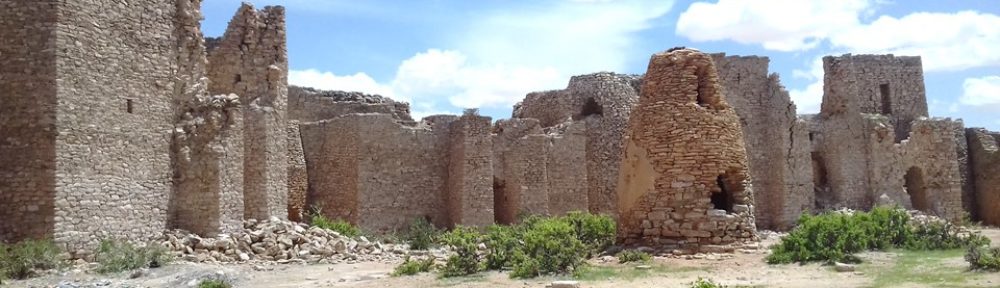
Note: the banner image is from a 2018 map depicting areas of influence. Al Shabaab = green. Not much has changed since then.

Is It Time to Recognize the Taliban Government?

Robert Kluijver. Published in The Conversation (France): December 1, 2024 and in The Conversation (English) on December 29, 2024.

Other language versions of this article were published in the World & New World Journal in Arabic, Russian, Spanish and German.

Is it justifiable to continue not recognizing the Taliban government, which has been in power for more than three years? This stance does nothing to improve the situation of Afghan women and prevents the international community from fully engaging with other critical issues playing in the country.

Selfie by the author with two senior Taliban officials (Director of International Trade and Head of Fairs and International Exhibitions)
Continue reading

Publication de chapitre sur l’enquête en zone de conflits

Ensemble avec Emmanuel Al Miah et Dércio Tsandzana, j’ai écrit le premier chapitre du livre ‘Enquêter en Terrain Sensible’ (Presses du Septentrion). Le livre examine les difficultés inhérentes aux études de terrain dans les zones liminaires – soit parce qu’il y a la guerre ou d’autres types de violence, soit à cause des politiques institutionnelles d’acteurs qui sont habitués à la discrétion, soit encore à cause du positionnement du chercheur face à son objet d’enquête.

Un grand merci aux directeurs de l’ouvrage pour l’initiative qu’ils ont pris, voici il y a deux ans, et leur patience pour mener ce projet à sa fin. Les autres contributions, y compris l’introduction à la première partie du livre par Roland Marchal, sont aussi très intéressantes.

Notre chapitre décrit comment on peut faire, malgré les difficultés, des recherches dans les zones de conflit, en prenant la Somalie, l’Irak et le Mozambique comme exemples.

La Somalie: État défaillant ou État aubaine?

This is my 1.5 page contribution to “Un Monde en Crises“, an analytical digest of the world today written by researchers of the Centre de Recherches Internationales. It argues that the Somali state is not a failure for Somali elites, who distribute international funding to their clan constituencies. Since all clans are represented in the current make-up of the Federal State, this maintains some stability in the country.

Continue reading

Interview in NRC over staatsopbouw in de Hoorn van Afrika

Interview

‘De liberale democratie die het Westen altijd als panacee voorschrijft, werkt simpelweg vaak niet’

https://www.nrc.nl/nieuws/2023/05/29/er-zijn-meerdere-vormen-van-bestuur-als-alternatief-van-een-centrale-overheid-a4165826

Robert Kluijver | Expert internationale betrekkingen

In de Hoorn van Afrika verkruimelen staatsstructuren. Het Westen moet steun geven aan plaatselijke zelfhulpinitiatieven van burgers, zegt Robert Kluijver.

De Hoorn van Afrika staat in brand en staatsapparaten verkruimelen. In Somalië ging de centrale staat al ten onder in 1991, in Ethiopië nemen sinds 2020 regio’s het op tegen de centrale autoriteit. En in Soedan raakten de machthebbers vorige maand onderling slaags. Maar de bevolking zit niet bij de pakken neer en werkt aan alternatieve vormen van bestuur. De vraag is hoe om te gaan met dit proces van eroderende staatsstructuren. Misschien is het misplaatst om een sterke centrale regering te willen vestigen en moet juist steun worden gegeven aan plaatselijke zelfhulpinitiatieven van burgers, zoals de verzetsgroepen in Soedan en de lokale vredesinitiatieven in Somalië. Dat betoogt Robert Kluijver, die westerse pogingen bestudeert om liberale democratieën te vestigen in landen die cultureel vaak enorm verschillen.

Wat is er over van de staat in Soedan?

Continue reading

Transnational Elite Theory: Understanding Hegemony in International Relations

Abstract

To understand the interplay between international hegemony and the apparent loss of state sovereignty, it is necessary to reintroduce the transnational elite as a global actor. Hegemony, meaning leadership, is based on values. The transnational elite embodies these values and adapts them to the changing global context, integrating counter-hegemonic tendencies and establishing a consensus. That consensus is transmitted through the transnational elite members to domestic societies whose consent – active or passive – is required for socioeconomic reforms which benefit the transnational elite. The role of states as sites for political contestation and debate has decreased, as policy-making, supposedly of a technical/expert nature, is shifted to the inter-state level, leading to an increase in international regulatory regimes which are dominated by the transnational elites. Instead, the state is increasingly becoming an instrument to transmit and enforce the transnational consensus. While transnational values remain largely liberal and elite membership is accessible to anyone sharing them, the manner of establishing consent is increasingly authoritarian. This article retraces the concept of the transnational class in international relations theory and, through a case study of the Trilateral Commission, looks at how the transnational elite has evolved since the 1970s, and how it is integrating counterhegemonic pressures today, becoming increasingly powerful – as the rapidly growing income gap between rich and poor underscores.

Download pdf full text here

Submitted to Millenium Journal of International Studies

Contemporary Art in the Gulf

Here is the full text of the book I published in 2013, called ‘Contemporary Art in the Gulf – an Introduction’.

Ibrahim Quraishi: A possible point of departure

And here is the Table of Contents:

7: Foreword
11: Contemporary Art in the Gulf
29: A Cultural History of the Arabian Peninsula
47: Saudi Arabia
69: Kuwait
87: Bahrain
99: The United Arab Emirates
119: Qatar
129: Oman
137: Where the Gulf is Heading

LINK TO THE BOOK

Article about Jonas Staal in Syria

002_small

Closing ceremony of the New World Summit in Derik, Syria

I published this article in the December 2015 edition of The Art Newspaper – with first a ‘news’ story on page 3, and then a feature on pages 58-59.  Continue reading

Art and Soft Power in the Gulf

Article published in Issue #47 of Afkar / Ideas published in October 2015 by the European Institute of the Mediterranean in Barcelona / French version / Spanish version

Ahmad Angawi: Ottoman Map of Mecca (detail), 2012

Ahmad Angawi: Ottoman Map of Mecca (detail), 2012

Art and Soft Power in the Gulf

Recently, there has been much news and debate about how the Gulf States are acquiring the icons of global culture, such as famous paintings, works by star artists, and even whole museums. This is seen as the exercise of ‘soft power’, defined by Joseph Nye as ‘the ability to get what you want through attraction, rather than coercion or payments’. One may wonder then, which objectives direct the Gulf’s investments in art? And, are they being achieved? Continue reading