Al Shabaab bans plastic bags


Late June 2018 the Somali insurgent movement Al Shabaab announced a ban on plastic bags, citing environmental concerns and the impact on livestock. In my travels through Somalia, I have noticed extensive plastic bag pollution. The first cause of death for camels in the United Arab Emirates is plastic bags (see an article in The National or a short analysis here), and undoubtedly they cause many deaths in Somalia too. Camel raising is a main source of wealth in Somalia. So a ban on plastic bags, whoever declares it, should be greeted with relief.

Mogadishu’s beaches are full of plastic and other litter

Remarkably, the few international media that reported on it, as well as almost all social media comments, ridiculed the decision. See for example the New York Times report which gives some examples of the laughter generated about the ‘first eco-terrorist group’.

Continue reading

Business Community of Mogadishu under fire

In brief: the IMF has congratulated the Federal Government of Somalia on its progress on revenue collection and other reforms it considers necessary. It has also suggested that the government increase its regulation of the Somali Telecoms sector, an often-repeated request of the international community, worried about Al Shabaab’s use of mobile money services. Meanwhile, the insurgent group has been engaged in a taxation war with the Islamic State. In the middle of these contentions, between a rock and a hard place, stands Mogadishu’s successful business community.

Pizza House in Hodan has considerably expanded since it was attacked by Al Shabaab a few years ago. It’s a favorite hangout of Mogadishu’s youth
Continue reading

Mysterious sculptures from Somaliland

A farmer reportedly found these sculptures on his land in the hills above Berbera, and I secured them for future research. I have pledged to keep them in Somaliland and accessible to experts, although for the time being I have not decided to which institution I will give them. When the municipality of Berbera opens a planned museum and the conditions there are considered appropriate for conservation, safety and display, they can go there; in the meanwhile a university in Hargeisa may be entrusted with their care.

Continue reading

Critical reading of latest UN Security Council deliberations on Somalia

At times it appears that United Nations analyses of local situations have become increasingly divorced from ground realities. This becomes apparent when one critically reads briefings to the Security Council, which often are closely reflected in subsequent Security Council resolutions.

In 2002, when I was political affairs officer for the UN mission in Afghanistan, I was charged with the compilation and writing of the weekly situation reports that were sent to the UN’s Department of Political Affairs, including the Secretary General’s office. Continue reading

Dealing with mob violence while driving in Addis Ababa

The following guidelines were written by me and shared with institutions after I ran into some trouble myself, getting my car beaten. They are based on several years providing this kind of security advice. They are probably valid in similar situations in other places.

Supporters of the Oromo Liberation Front being trucked in to Addis, Tor Hailoch 13 Sept 2018. Photo by Mariko Peters

  1. Precaution
  2. Observation
  3. Reaction
  4. Attitude
  5. Reporting

Continue reading

Patterns of International Involvement in Somalia

(this is the concluding section of the first chapter of my doctoral thesis in preparation, “International Intervention and State-Building in Somalia”, 45 pages. The entire chapter can be downloaded here).

The historic survey of international interventions in Somalia provides us with some interesting insights:

  1. The Somali state has been an international project that started in the 1950s. State-building has taken place above and along local governance systems, usually clan-based, that have continued to function in the absence of an effective state. Rather than being the fundamental organizing principle of Somali society – as is often assumed – the Somali state is essentially an interface between that society and the international community, brought into being and almost entirely funded by the latter.
  2. The state provides external resources that can be captured. President Siad Barre had captured and then exhausted this resource as he fought against his rivals. The vestiges of the state—its property of land and buildings, weapons, personnel, reserves, monopoly position regarding taxation, etc.—were either destroyed or divided among many Somali factions in the civil war. Without a state to fight about, Somali society stabilized into forms of local governance in the 1990s.
  3. As an instrument, the Somali state has mainly been used in a predatory fashion. It has never invested much in education, health and infrastructure. Somali experiences of the state have been overall negative, from Barre’s time to today, when a checkpoint manned by government forces is more likely to result in extorsion, rape or intimidation, than one manned by clan militia or Al Shabaab. This negative perception of the state among the Somali public is not addressed in international state-building plans.
  4. There is a clear correlation between levels of external financial support and civil strife in Somalia: The more aid, the more war. Both humanitarian and ‘state-building’ assistance are seen as a resource to be captured.
  5. The one time that a home-grown system of governance was established in most of Somalia, the Islamic Courts Union, it was rapidly destroyed by external intervention. The international community supported the Ethiopian invasion under the banner of the War on Terror. This gave Somalis the impression that the international community is not interested in peace and stability per se, but only on its own terms, through a state that it controls; this leads them to believe that control is the objective of the international presence in Somalia.
  6. Since 2004 the international community has embarked on a sustained effort to create a new Somali state, based on a federal model. The de facto independence of Somaliland since 1991 has not been recognized. Although many Somalis still contest the legitimacy of the federal state, it appears that acceptance levels are gradually rising, as that state, while still quite powerless, is becoming increasingly stable. The insistence may be paying off, but Somalia remains a failed state by all definitions.
  7. The international community has always been coy about its involvement in conceiving, building and sustaining the Somali state, making it seem like either a developmental necessity (in the 1950s), or as a request by Somalis themselves (since 1992). Given the systematic dependence on external support, the donors of the Somali state could claim ownership over it, but instead they maintain the fiction of sovereignty and independence.
  8. There is little historical evidence that the colonial period was a traumatic one in Somalia, and it would be hard to argue that the roots of Somalia’s troubles lie in the policies of colonial powers. In fact, colonial administrators made more efforts to understand and work within the Somali context than interveners do today. The colonial period was disruptive because it was the first contact between Somalis and the ‘modernized’ world, but then prevalent policies sought to preserve and work with local balances of power and traditional self-governance rather than replace/reorganise them as today.
  9. Until the 1990s, there was a degree of frankness within the international community when discussing the situation in Somalia; since the 2000s, international discourse about its presence and objectives in Somalia has become increasingly out of touch with reality. This is evident, for example, when comparing UN documents about Somalia of the 1940s, 1990s and 2010s. Today, international agencies’ assessments of the context and the actions to be taken therein are often in contradiction with those made by independent experts.
  10. The disconnect between international intervention and the Somali ground truth has notably increased with the Global War on Terror. Somalia was no threat to the international community, but it has been treated as such since 2001. It can be argued that the War on Terror has spawned radical Islam and extremism in Somalia, rather than preventing it. Despite – or because of – more than a decade of warfare.
  11. Intervention in Somalia has been justified mostly on humanitarian grounds, both in policy documents and towards international public opinion. However, humanitarian action has been increasingly constrained and diverted for external state-building and counter-terrorism purposes. This has led not only to failure of international assistance when Somalia faced major crises (1991-1993, 2007-2008 and 2011-2012), but also to the loss of impartiality and autonomy, as the aid sector is now amalgamated to the overall Western agenda of forced modernization and is incapable of accessing populations in opposition-held areas.
  12. Somalia has been a test case where many of the assumptions underlying international intervention have been broken. Both superpowers failed to make Somalia an ally despite considerable investments. The UN intervention failed spectacularly to bring peace and allow humanitarian aid delivery, despite the seminal invocation of Chapter VII of the UN charter and the massive means deployed. The powerful US was routed militarily in 1993. The NGO sector lost its independence. Coordinated donor policies failed to make an impact on the ground. Despite being one of the theatres of the War on Terror and ‘Counter Violent Extremism’ programs, at least half of South-Central Somalia is controlled by Al Shabaab, which has progressively radicalized.

In short, it seems Somalis never aspired to building a state and the international efforts to create one and then support it have met with overall failure. From a study of the internal dynamics of Somali society over the past hundred years, it seems clear that the less intervention in Somalia, the better. It also appears Somali systems of self-governance have been resilient and overall effective, although skewed toward the powerful clans. Why then is the international community still engaged in external state-building in Somalia? After having discarded internal reasons to do so, it is time to consider possible reasons external to the Somali context.

Warning: Somaliland and Puntland sliding toward war

UPDATE: Fortunately the conflict was stopped by intense diplomacy, mostly to the credit of the UN Special Representative Michael Keating, who engaged in several rounds of shuttle diplomacy; President Farmajo also played a positive role, instead of weighing in on the side of Puntland as was long feared/expected. Currently (Feb 2020) the conflict is in its frozen state, as it has been since the late 1990s.

Several weeks after our report the International Crisis Group issued a report on the same subject, with many similar perspectives but more detail and links

June 1, 2018, Hargeisa and Addis Ababa. Over the past weeks more than 75 soldiers have been killed in the conflict opposing Puntland and Somaliland near Tukaraq. This is the heaviest death toll recorded in conflict between the two states over the past twenty years.

Landscape of the Nugaal plain near Faleeryale in the contested area. Pic by R Kluijver

Continue reading

Visit to the ruins of the fortress of Sayyid Hassan, aka the ‘Mad Mullah’

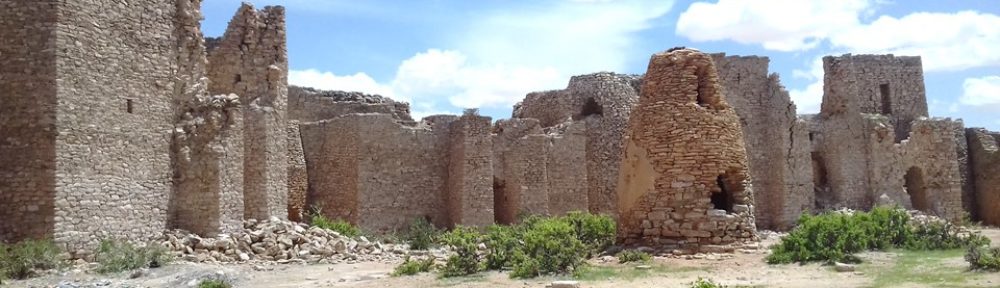
I visited Taleex (pronounce Tal-ayh) in May 2017. Now, a year later, the armies of Puntland and Somaliland are confronting each other in deadly clashes nearby. These are the slides of a presentation I vainly sent to UNESCO to elicit their interest in preserving this exceptional monument of cultural heritage – the whole urban centre.


Continue reading

Somaliland votes for Stability – Personal Observation

Nov 13, 2017, from an independent observer


The elections today in Somaliland were remarkably peaceful and orderly. Observers hardly remarked any irregularity. Participation rates seem to be high. In and around Hargeisa an estimated 80-90% of registered voters cast their vote. Queues were orderly and polling staff, party observers and police appeared to fulfill their tasks professionally.

It is widely expected that the ruling Kulmiye party, whose current President Silanyo is stepping down, will win the popular vote, but the main opposition party, Wadani, could come a close second. The other party in this constitutionally-fixed three party system, UCID, will certainly come last. The results are expected to be announced around November 17 or 18; until then, social media is cut off.


No clashes with Puntland

Continue reading